
Cavitation phenomenon: The "Invisible killer" of pump and valve equipment
In fluid transportation sites, many conditions have encountered the same phenomenon: centrifugal pumps suddenly "roar" and vibrate, flow and head drop sharply, impellers become pitted or even perforated after a period of use, and maintenance costs remain high. In fact, this is not due to the vulnerability of the equipment itself, but rather the "invisible killer" of pump and valve operation - cavitation, whose root cause is insufficient net positive suction head (NPSH) of the pump. 1. What exactly is net positive suction head (NPSH)? To understand the net positive suction head (NPSH), you need to understand the nature of cavitation - simply put, it is when the liquid "boils" inside the pump. As the liquid flows through the pump inlet, the pressure gradually decreases. If the pressure drops to the saturated vapor pressure of the liquid at the current temperature, the liquid will vaporize rapidly, generating a large number of bubbles. When these bubbles are carried to the high-pressure area inside the pump, they burst instantly, generating an impact force of hundreds or even thousands of atmospheres, repeatedly hitting metal surfaces such as impellers like countless small bullet heads, eventually causing corrosion and damage to the equipment. This is cavitation.
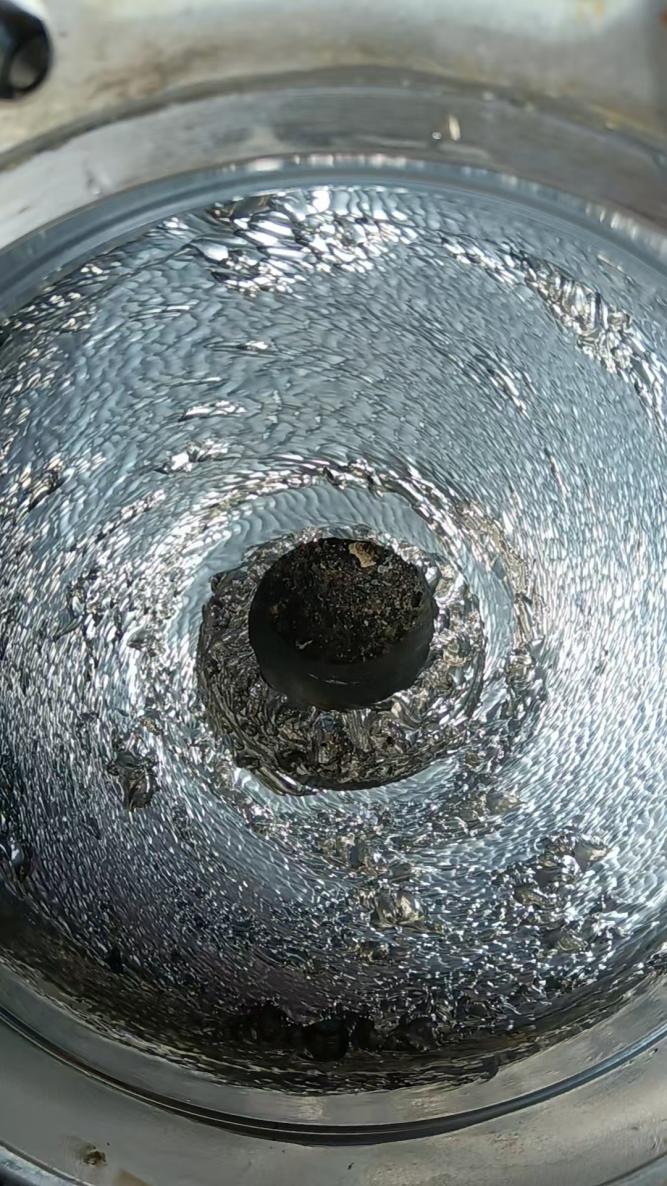
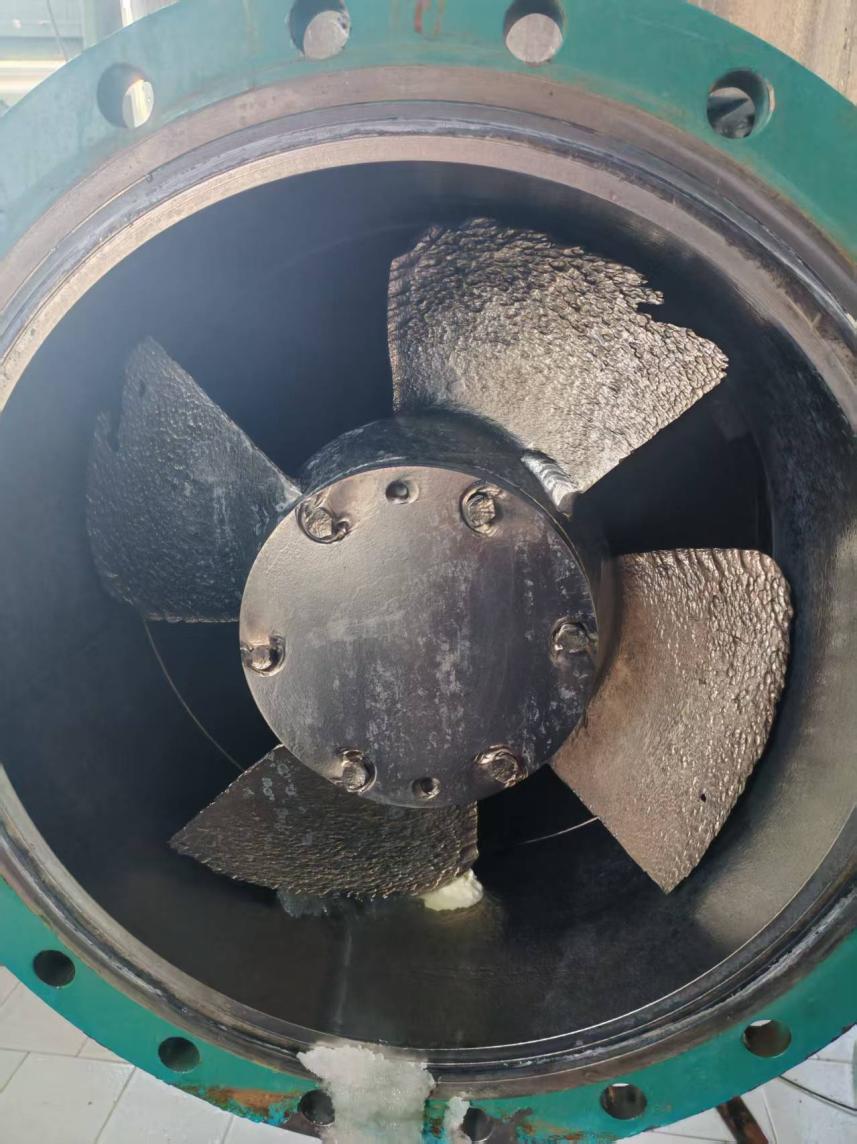
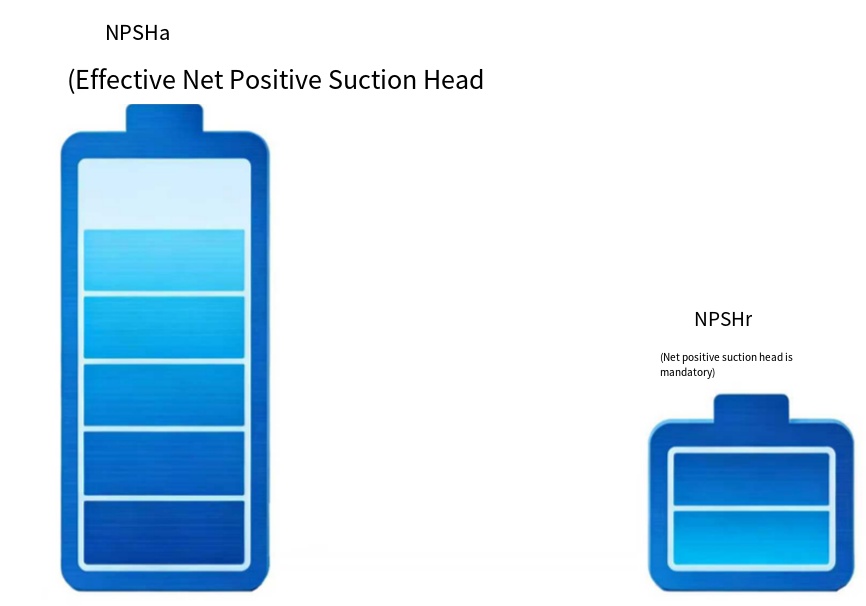
Figure 1 shows the mechanical damage to the pump caused by cavitation Net Positive Suction Head (NPSH), which measures the "anti-vaporization ability" of the liquid at the pump inlet, is measured in meters (water column). 2. Classification of Net Positive Suction Head The net positive suction head determines whether the pump is "safe". Many people can't tell the difference between the types of net positive suction head (NPSHr) and effective net positive suction head (NPSHa). The matching relationship between the two directly determines whether the pump will have cavitation. Effective net positive suction head (NPSHR) is commonly understood as the "storage" of electricity in electric vehicles, while necessary net positive suction head (NPSHR) is understood as the "consumption" of electricity in electric vehicles. Only sufficient storage is needed to keep this "electric vehicle" running steadily. Golden rule: NPSHa ≥ NPSHr + Safety margin for the pump to be safe (for clean water pumps/low-viscosity medium pumps, it is recommended to reserve 0.5 to 1.0 meters of safety margin in engineering; for high-temperature, vaporizable, and particle-containing medium pumps, 1.0 to 2.0 meters should be reserved).
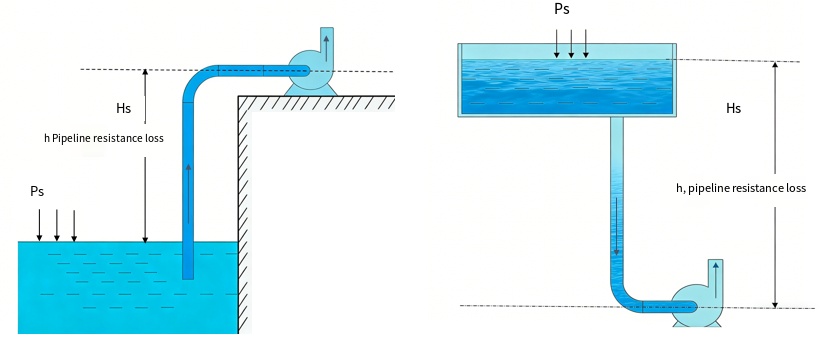
Figure 2 Relationship between net Positive Suction head (NPSHR) matching and pump safety ① Required Net Positive Suction Head (NPSHr) : "Electricity consumption" of the pump Definition: The minimum surplus energy that a pump must have at its inlet to avoid cavitation Characteristics: Closely related to the structural design, rotational speed and flow rate of the pump, it is an inherent property determined by the pump manufacturer through experimental testing Influencing factors: Impeller inlet shape, pump inlet flow area, speed, flow rate, medium viscosity This value is determined by the pump manufacturer through experiments and will be marked on the pump's nameplate. The smaller the value, the better the pump's cavitation resistance - for example, under the same working conditions, a pump with NPSHr=2m is more durable than one with NPSHr=3m. ② Effective Net Positive Suction Head (NPSHa) : The "stored electricity" of pipeline installation Definition: The excess energy of a unit weight of liquid at the pump inlet that exceeds the vaporization pressure Characteristics: Determined by the system installation conditions and the nature of the liquid, independent of the pump model Calculation formula: Among them: (Ps) : Absolute pressure at the suction level (kPa) (atmospheric pressure if the container is open) ( Pv): Saturated vapor pressureof the liquid at the current temperature (kPa) (Hs) : The vertical height difference from the liquid level to the pump inlet (m, positive for backflow, negative for suction) (hf) : Loss in the suction pipe (m)
Figure 3 Schematic diagram of the suction/backflow installation of the pump Influencing factors: Surface pressure of the suction liquid level, density of the liquid being sucked, installation height of the pump inlet centerline, total hydraulic loss of the suction pipe 3. The actual impact of cavitation on pump performance When cavitation occurs in the pump, it not only causes mechanical damage to flow-through components such as impellers, but also has a significant impact on the performance and operational stability of the pump, and cavitation can be quickly determined on-site through intuitive features: Listen - there are high-frequency, sharp abrasive friction sounds/crackling sounds in the pump body and inlet pipeline, and the noise increases with the increase of flow; Look - The pointer of the outlet pressure gauge and flow meter of the pump swings violently, and the head/flow rate decreases gradually with the running time; Feel - Abnormal vibration at the pump shaft end and bearing housing, and a slight increase in bearing temperature as cavitation progresses: ① Mechanical damage Damage to the impeller surface: mainly manifested as the high-frequency impact effect caused by bubble burst: When the bubbles in the liquid flow burst near the impeller, extremely high instantaneous pressure is generated. This sudden increase in local pressure causes a continuous impact on the surface of the metal material, thereby causing mechanical erosion of the surface layer of the material. Microscopic damage mechanism: Each independent bubble collapse process will form a tiny pit on the metal surface, with a size approximately ranging from 10 to 50 micrometers. As the running time accumulates, these scattered pits increase and connect with each other through long-term, repeated cavitation, eventually forming a dense corrosion morphology similar to a "horse honeycomb" on the metal surface. If this damage continues to develop, the corrosion area will deepen and expand, and in severe cases, it may even cause partial perforation of the impeller, seriously affecting the mechanical strength and service life of the impeller. Material selection impact: Use special anti-cavitation materials to resist cavitation impact and erosion at the material level: Ordinary cast iron and carbon steel impellers have poor anti-cavitation performance and need to be replaced with special materials according to the working conditions. For normal water and weak corrosive medium conditions, 304/316 stainless steel is preferred, which has much better toughness and erosion resistance than ordinary cast iron. In chemical, granular or high-temperature corrosive liquid conditions, it is recommended to upgrade to duplex steel, chromium-nickel alloy or hard alloy; After comprehensive consideration, the selected material should be able to resist cavitation impact and also take into account chemical corrosion protection. ② Performance degradation Flow and head: Cavitation can significantly reduce the flow and head of the pump. For low specific speed pumps (such as chemical pumps), the performance curve drops suddenly when cavitation occurs; For medium to high specific speed pumps, cavitation development goes through a transition from a slow decline to a sharp deterioration; Efficiency loss phenomenon: When cavitation occurs inside the pump, the formation, growth and rupture of bubbles interfere with the normal flow state of the fluid and cause the smooth walls to become irregular, which also affects the flow state of the conveyed medium, resulting in a significant reduction in the overall working efficiency of the pump. The efficiency reduction is usually less than 5% in mild cavitation and can reach 10% to 20% in severe cavitation. Efficiency can plummet sharply in extreme cavitation conditions. Vibration and noise: In terms of vibration frequency, the main frequency of vibration caused by cavitation is not a constant value. It shows different numerical characteristics as the operating conditions change, presenting a dynamic variation characteristic. In terms of noise characteristics, it is mainly characterized by a continuous high-frequency burst sound, which is similar to the sound produced by the rapid flow of gravel in the pipeline, and is also mixed with irregular crackling sounds, which together constitute the specific noise signal when cavitation occurs. 4. Practical Tips: Control cavitation in advance to reduce maintenance costs In order to significantly enhance the cavitation resistance of the water pump, reduce the failure rate during operation, and thereby reduce unnecessary maintenance and power consumption costs, systematic preventive and control measures need to be taken based on specific working conditions and environments. These measures mainly focus on two core aspects: one is the optimization and improvement of the pump body itself, and the other is the adjustment and improvement of the pipeline system connected to it, to achieve comprehensive prevention and control of cavitation through both approaches. ① Optimize the pump itself to enhance its anti-cavitation "constitution" 1 When selecting pump equipment, give priority to pumps with a smaller required net positive suction head (NPSHr) value: Under the same operating conditions (such as flow rate, head, etc.), pump types with a lower net positive suction head index should be screened and adopted first, which can effectively reduce the possibility of cavitation from the very beginning of equipment selection and achieve risk control in advance; 2 Make targeted modifications to the pump body structure of existing pumps: Install a pre-induced wheel device at the fluid inlet of the pump to give the liquid a certain amount of energy before entering the main impeller, thereby increasing the liquid pressure at the inlet; Or consider a double-suction impeller design, which can significantly increase the inlet flow area of the pump, thereby effectively reducing the flow velocity of the liquid at the inlet and reducing the conditions for cavitation; 3 Use materials with excellent cavitation resistance to make key components: Replace impellers made of common materials with high-strength, chemically stable alloy materials such as stainless steel, which can better resist the impact and chemical corrosion caused by the formation and collapse of cavitation bubbles, thereby significantly reducing the material damage and damage caused by cavitation to metal components. ② Optimize the piping system to enhance "supply capacity" To effectively increase the net positive suction head (NPSHa) of the pump, the following specific measures can be taken: 1. Reduce the installation height of the pump: In actual operation, the installation position of the pump should be lowered as much as possible to minimize the vertical distance between the pump inlet and the liquid surface. If the site conditions permit, it is recommended to change the traditional upsuction installation method to the backflow installation, that is, to install the pump below the liquid surface, which can significantly increase the effective net positive suction head and thereby reduce the risk of cavitation; If it is not possible to lower the pump installation height on site, a booster tank/siphon tank can be added to the suction liquid surface to increase the absolute pressure Ps of the suction liquid surface, thereby enhancing NPSHa. 2 Simplify the suction pipeline configuration: By shortening the overall length of the suction pipeline, reducing the number of unnecessary elbows, valves and other fittings, and regularly cleaning or replacing filters to minimize the drag along the pipeline and local drag, improve the suction conditions. 3. Reasonably control the temperature of the conveyed liquid: For media that are prone to vaporization, appropriate cooling measures should be taken, such as installing a cooler at the pump inlet to reduce the saturated vapor pressure of the liquid, thereby increasing the pressure reserve of the system and ensuring sufficient net positive suction head at the pump inlet. 4 Install an intelligent monitoring system: Install a high-precision pressure transmitter at the pump inlet to monitor and record changes in NPSHa in real time, and provide early warning of cavitation risk through data feedback to facilitate timely adjustment of operating parameters and ensure the safe and stable operation of the pump. |
Product?s | |||||

WeChat Official Account